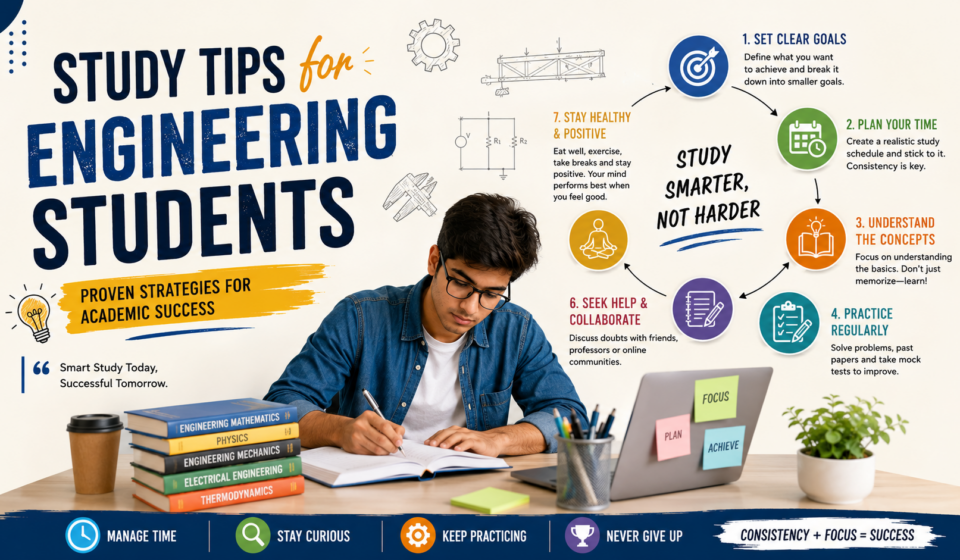

Discover the best study tips for engineering students to improve productivity, manage time effectively, score higher grades, and reduce exam stress. Learn proven strategies for academic success.
Engineering is one of the most challenging academic fields. Students often deal with complex subjects, multiple assignments, practical projects, lab work, and competitive exams. Without proper study techniques, managing all these responsibilities can become overwhelming. However, with the right study habits and strategies, engineering students can improve their academic performance, reduce stress, and achieve long-term success.
This guide covers practical and effective study tips specifically designed for engineering students to help them stay productive, organized, and focused throughout their academic journey.
Why Effective Study Habits Matter for Engineering Students
Engineering courses require analytical thinking, problem-solving skills, and a deep understanding of technical concepts. Unlike other disciplines that may focus heavily on memorization, engineering demands conceptual clarity and practical application.
Students who develop effective study habits can:
- Improve academic performance
- Understand complex concepts more easily
- Manage time efficiently
- Reduce exam-related stress
- Build stronger problem-solving skills
- Prepare effectively for future careers
Create a Structured Study Schedule
A well-planned study schedule helps engineering students balance coursework, assignments, projects, and personal activities.
Benefits of a Study Schedule
- Prevents last-minute cramming
- Improves consistency
- Helps prioritize important subjects
- Enhances time management
Try allocating specific time blocks for lectures, revision, assignments, and practice problems. Use digital planners or calendar apps to stay organized.
Focus on Understanding Concepts Instead of Memorization
Engineering subjects rely heavily on conceptual understanding. Simply memorizing formulas without understanding their applications often leads to poor performance.
How to Improve Conceptual Learning
- Understand the logic behind formulas
- Watch educational videos for difficult topics
- Relate concepts to real-world engineering applications
- Ask questions during lectures
- Participate in group discussions
A strong conceptual foundation makes advanced topics easier to understand.
Practice Problem-Solving Regularly
Engineering is a practical discipline. Success depends on solving problems rather than just reading textbooks.
Effective Problem-Solving Techniques
- Solve previous year question papers
- Attempt numerical problems daily
- Work on sample exercises
- Analyze mistakes and learn from them
- Practice different methods for solving the same problem
Regular practice improves accuracy, speed, and confidence.
Use Active Learning Techniques
Active learning engages the brain more effectively than passive reading.
Active Learning Methods
- Summarize topics in your own words
- Create mind maps
- Teach concepts to classmates
- Use flashcards for formulas
- Take self-assessment quizzes
Research shows that active learning significantly improves knowledge retention and understanding.
Take Organized Notes
Well-organized notes serve as a valuable revision resource during exams.
Tips for Better Note-Taking
- Use clear headings and subheadings
- Highlight key concepts
- Include diagrams and illustrations
- Write important formulas separately
- Keep notes concise and easy to review
Digital note-taking apps can also help organize study materials efficiently.
Master Time Management Skills
Many engineering students struggle because of poor time management rather than academic difficulty.
Time Management Strategies
- Prioritize tasks based on deadlines
- Use the Pomodoro Technique
- Break large projects into smaller tasks
- Avoid multitasking
- Set daily and weekly goals
Managing time effectively helps reduce stress and increase productivity.
Make the Most of Engineering Resources
Modern engineering students have access to numerous learning resources beyond textbooks.
Useful Learning Resources
- Online courses
- Educational YouTube channels
- Technical blogs
- Engineering forums
- University libraries
- Research papers
Combining multiple resources helps students gain deeper insights into complex topics.
Form Productive Study Groups
Study groups can be highly beneficial when managed properly.
Advantages of Study Groups
- Share knowledge and ideas
- Clarify difficult concepts
- Stay motivated
- Improve communication skills
- Learn different problem-solving approaches
Choose dedicated and focused group members for maximum effectiveness.
Minimize Distractions While Studying
Distractions can significantly reduce study efficiency.
Ways to Stay Focused
- Turn off unnecessary notifications
- Use website blockers
- Keep your study area organized
- Study in a quiet environment
- Follow dedicated study sessions
Creating a distraction-free environment improves concentration and learning outcomes.
Prioritize Practical Learning
Engineering is application-based. Practical learning strengthens theoretical understanding.
Practical Learning Methods
- Participate in lab sessions actively
- Build personal projects
- Join engineering competitions
- Work on internships
- Explore industry case studies
Hands-on experience enhances technical skills and employability.
Prepare Strategically for Exams
Exam preparation should begin well before the exam date.
Effective Exam Preparation Tips
- Start revision early
- Focus on high-weightage topics
- Solve mock tests
- Review mistakes regularly
- Maintain a revision timetable
Consistent preparation reduces anxiety and improves performance.
Maintain a Healthy Lifestyle
Physical and mental well-being directly impact academic performance.
Healthy Habits for Students
- Get 7–8 hours of sleep
- Exercise regularly
- Eat nutritious food
- Stay hydrated
- Take short study breaks
A healthy body supports better concentration, memory, and productivity.
Develop Strong Technical Skills
Engineering graduates are expected to possess technical competencies in addition to academic knowledge.
Essential Technical Skills
- Programming
- Data analysis
- CAD software
- Project management
- Technical communication
Learning these skills alongside coursework improves career opportunities.
Build Consistency Instead of Studying Intensively
Many students make the mistake of studying only before exams.
Why Consistency Matters
- Improves long-term retention
- Reduces stress
- Builds confidence
- Enhances understanding
- Prevents burnout
Even studying for one or two hours daily can produce better results than occasional long study sessions.
Use Technology Wisely
Technology can significantly enhance learning when used effectively.
Helpful Study Tools
- Notion
- Microsoft OneNote
- Google Drive
- Wolfram Alpha
- MATLAB
- Anki Flashcards
These tools help organize information, solve problems, and improve productivity.
Develop a Growth Mindset
Engineering can be difficult, and setbacks are common. Students who maintain a growth mindset are more likely to succeed.
Characteristics of a Growth Mindset
- Learn from mistakes
- Embrace challenges
- Seek feedback
- Stay persistent
- Focus on improvement
Viewing challenges as learning opportunities promotes long-term success.
Sources
https://sl1nk.com/9bm9vjp
https://l1nq.com/eem47a3
Conclusion
Engineering education requires dedication, discipline, and effective study strategies. By creating a structured study schedule, focusing on conceptual understanding, practicing problem-solving regularly, managing time efficiently, and maintaining a healthy lifestyle, students can significantly improve their academic performance and overall learning experience.
Success in engineering is not about studying harder but studying smarter. Consistency, practical learning, and continuous improvement are the keys to becoming a successful engineering student and future professional engineer.
FAQs
What is the best study method for engineering students?
The best method is a combination of conceptual learning, regular problem-solving practice, active learning techniques, and consistent revision.
How many hours should engineering students study daily?
Most engineering students benefit from studying 2–4 focused hours daily outside of lectures, depending on workload and academic goals.
How can engineering students improve problem-solving skills?
Students can improve problem-solving skills by practicing numerical questions regularly, solving previous exam papers, and analyzing mistakes.
Are study groups helpful for engineering students?
Yes, productive study groups can help clarify difficult concepts, improve understanding, and increase motivation.
How can engineering students avoid exam stress?
Starting preparation early, following a study schedule, practicing mock tests, and maintaining healthy habits can reduce exam stress significantly.