
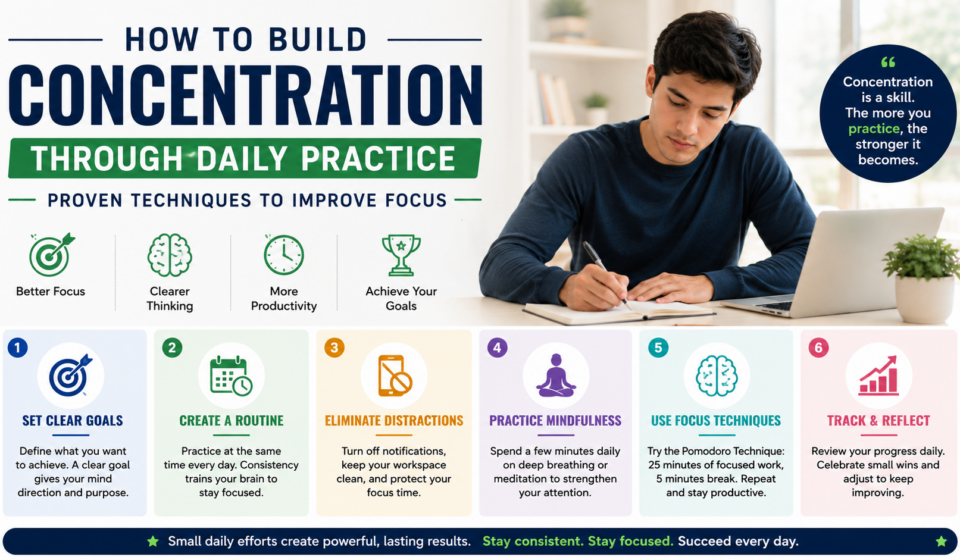

Learn how to build concentration through daily practice with proven techniques, mindfulness exercises, healthy habits, and productivity strategies. Improve focus and mental performance naturally.
In today’s fast-paced digital world, maintaining concentration has become increasingly difficult. Constant notifications, social media distractions, and multitasking habits can significantly reduce our ability to focus on important tasks. Whether you’re a student preparing for exams, a professional managing multiple projects, or someone simply looking to improve productivity, building concentration through daily practice can transform your performance and overall quality of life.
Concentration is not a talent that some people are born with and others lack. It is a skill that can be developed and strengthened over time through consistent practice. Just as regular exercise strengthens muscles, daily mental exercises improve your ability to focus and maintain attention.
This guide explores practical strategies and habits that can help you build concentration naturally and effectively.
Understanding Concentration and Why It Matters
Concentration is the ability to direct your attention toward a specific task, thought, or activity without being distracted. Strong concentration allows you to process information more efficiently, complete tasks faster, and make better decisions.
Benefits of improved concentration include:
- Increased productivity
- Better academic performance
- Enhanced memory retention
- Reduced stress levels
- Improved problem-solving abilities
- Greater self-discipline
- Higher work quality
When concentration improves, daily activities become more manageable, and achieving personal and professional goals becomes easier.
The Science Behind Focus and Attention
The brain functions like a muscle that adapts based on how it is used. Regular focus training strengthens neural pathways associated with attention control. Research suggests that repeated practice of focused activities can improve cognitive functions and enhance mental performance.
Distractions force the brain to constantly switch between tasks, consuming valuable mental energy. By training the mind to stay focused on one activity at a time, you can improve efficiency and reduce mental fatigue.
Neuroplasticity and Concentration
Neuroplasticity refers to the brain’s ability to reorganize itself by forming new neural connections. Daily concentration exercises encourage positive changes in brain structure, making sustained attention easier over time.
Start Your Day with Mindfulness Practice
Mindfulness is one of the most effective methods for improving concentration. It trains the mind to remain present and aware rather than wandering toward distractions.
A simple mindfulness routine can include:
- Sitting quietly for 5–10 minutes
- Focusing on your breathing
- Observing thoughts without judgment
- Returning attention to the breath when distracted
Regular mindfulness practice enhances attention span and reduces mental clutter.
Benefits of Mindfulness for Focus
- Improves attention control
- Reduces anxiety
- Enhances self-awareness
- Increases mental clarity
- Promotes emotional stability
Create a Distraction-Free Environment
Your environment significantly impacts your ability to concentrate. Even small distractions can interrupt deep focus and reduce productivity.
To create a focus-friendly workspace:
- Keep your desk organized
- Silence unnecessary notifications
- Use noise-canceling headphones if needed
- Maintain proper lighting
- Remove visual clutter
A clean and organized environment allows the brain to dedicate more resources to the task at hand.
Practice Single-Tasking Instead of Multitasking
Many people believe multitasking improves efficiency, but research consistently shows the opposite. Switching between tasks reduces concentration and increases errors.
Focus on completing one task before moving to another. This practice strengthens attention control and improves overall productivity.
How to Single-Task Effectively
- Prioritize your tasks
- Set clear goals
- Work on one activity at a time
- Avoid checking messages during focused work sessions
- Complete a task before starting another
Use the Pomodoro Technique
The Pomodoro Technique is a proven time-management method that helps maintain concentration.
The process involves:
- Work for 25 minutes.
- Take a 5-minute break.
- Repeat four cycles.
- Take a longer 15–30 minute break.
This method prevents mental exhaustion while encouraging sustained focus.
Why the Pomodoro Technique Works
Short, structured work sessions make tasks feel more manageable and reduce procrastination. Regular breaks also help maintain mental energy throughout the day.
Train Your Brain with Focus Exercises
Daily mental exercises can strengthen concentration and cognitive function.
Some effective activities include:
- Reading books without interruptions
- Solving puzzles
- Playing chess
- Practicing memory games
- Learning a new language
- Meditation exercises
Consistent brain training challenges attention systems and improves mental endurance.
Prioritize Quality Sleep
Sleep is essential for cognitive performance and concentration. Lack of sleep affects memory, decision-making, and attention span.
Most adults need between 7 and 9 hours of quality sleep each night.
Tips for Better Sleep
- Maintain a consistent sleep schedule
- Avoid screens before bedtime
- Limit caffeine intake in the evening
- Keep the bedroom dark and cool
- Establish a relaxing bedtime routine
Well-rested individuals typically experience higher levels of focus and productivity.
Maintain a Healthy Diet for Brain Function
Nutrition plays a vital role in mental performance. The brain requires a steady supply of nutrients to function optimally.
Foods that support concentration include:
- Fatty fish rich in omega-3 fatty acids
- Nuts and seeds
- Blueberries
- Leafy green vegetables
- Eggs
- Whole grains
- Dark chocolate in moderation
Staying hydrated is equally important, as even mild dehydration can negatively impact concentration.
Exercise Regularly to Improve Focus
Physical activity benefits both the body and the brain. Exercise increases blood flow to the brain and stimulates the release of chemicals that support cognitive function.
Recommended activities include:
- Walking
- Running
- Cycling
- Yoga
- Strength training
- Swimming
Even 20–30 minutes of daily exercise can significantly enhance concentration levels.
How Exercise Supports Mental Focus
Regular movement improves mood, reduces stress, and enhances memory and attention capabilities.
Limit Digital Distractions
Technology is one of the biggest obstacles to concentration. Social media, emails, and constant notifications can interrupt focus repeatedly throughout the day.
Strategies to reduce digital distractions include:
- Turning off non-essential notifications
- Using website blockers
- Scheduling specific times for checking messages
- Keeping the phone out of reach during work sessions
- Utilizing focus applications
Creating digital boundaries allows deeper and more productive work.
Set Clear Goals and Priorities
A lack of direction often leads to poor concentration. Clear goals help the brain understand what deserves attention.
Each day, identify:
- The most important task
- Key objectives
- Specific deadlines
- Expected outcomes
Written goals improve focus and reduce decision fatigue.
Practice Deep Work Daily
Deep work refers to focused, distraction-free effort on cognitively demanding tasks.
To develop a deep work habit:
- Schedule dedicated focus periods
- Eliminate interruptions
- Set measurable objectives
- Track progress regularly
Even one hour of deep work daily can dramatically improve concentration and productivity.
Be Patient and Consistent
Building concentration is a gradual process. Results may not appear immediately, but consistent practice leads to significant improvements over time.
Focus on progress rather than perfection. Small daily improvements accumulate into powerful long-term results.
Signs Your Concentration Is Improving
- Longer focus periods
- Reduced distraction frequency
- Faster task completion
- Improved memory retention
- Better work quality
Developing concentration requires commitment, but the rewards are well worth the effort.
Sources
https://l1nq.com/gna7ctn
https://sl1nk.com/b9wguv4
Conclusion
Learning how to build concentration through daily practice is one of the most valuable investments you can make in yourself. By incorporating mindfulness, healthy lifestyle habits, focus exercises, structured work sessions, and distraction management techniques into your daily routine, you can significantly enhance your attention span and productivity.
Remember that concentration is a skill developed through consistent effort. Start with small changes, remain patient, and practice regularly. Over time, you will notice greater mental clarity, improved performance, and a stronger ability to focus on what truly matters.
FAQs
What is the fastest way to improve concentration?
The fastest way to improve concentration is by reducing distractions, practicing mindfulness, getting enough sleep, and using structured focus methods such as the Pomodoro Technique.
How long does it take to improve concentration?
Most people begin noticing improvements within a few weeks of consistent daily practice, though significant changes may take several months.
Can meditation improve concentration?
Yes. Meditation and mindfulness practices strengthen attention control, increase self-awareness, and improve overall focus.
Does exercise help with concentration?
Regular physical activity improves blood flow to the brain, supports cognitive function, and enhances concentration.
Which foods improve focus and concentration?
Foods rich in omega-3 fatty acids, antioxidants, vitamins, and minerals such as fish, berries, nuts, eggs, and leafy greens can support brain health and focus.