
Discover how stress affects studying, memory, concentration, and academic performance. Learn effective stress management techniques for students to improve focus, productivity, and overall well-being.
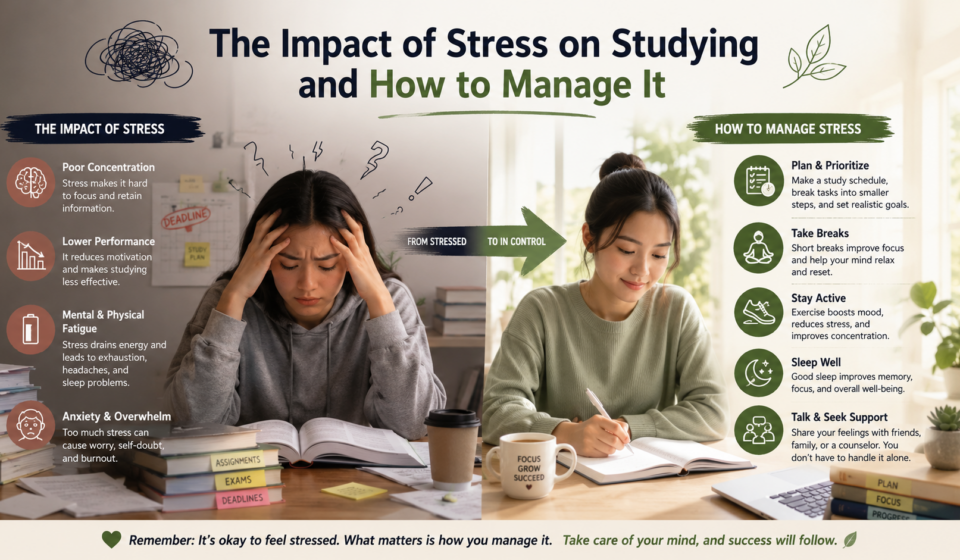
Stress has become a common part of student life in today’s fast-paced academic environment. Whether preparing for exams, managing assignments, balancing extracurricular activities, or planning for the future, students often experience significant pressure. While a moderate level of stress can motivate students to perform better, excessive stress can negatively impact learning, concentration, memory, and overall academic performance.
Understanding how stress affects studying and learning practical ways to manage it can help students achieve academic success while maintaining their mental and physical well-being. This article explores the impact of stress on studying and provides proven strategies to manage stress effectively.
Understanding Stress in Students
What Is Stress?
Stress is the body’s natural response to challenges, demands, or pressures. When students face academic deadlines, examinations, or personal issues, their bodies release stress hormones such as cortisol and adrenaline. These hormones prepare the body to respond to challenging situations.
While short-term stress can enhance alertness and performance, chronic stress can interfere with cognitive functions and overall health.
Common Causes of Student Stress
Students experience stress due to various academic and personal factors, including:
- Exam preparation and test anxiety
- Heavy coursework and assignments
- Time management difficulties
- Pressure to achieve high grades
- College admissions concerns
- Financial challenges
- Social expectations
- Lack of sleep
- Family responsibilities
- Future career uncertainty
How Stress Affects Studying
Reduced Concentration and Focus
One of the most noticeable effects of stress is reduced concentration. When students are stressed, their minds become occupied with worries and negative thoughts, making it difficult to focus on study materials.
As a result:
- Reading comprehension decreases
- Attention span becomes shorter
- Information processing slows down
- Productivity declines
Students may spend hours studying without effectively absorbing information.
Memory Problems
Stress significantly affects memory formation and retention. High levels of cortisol can disrupt the brain’s ability to store and retrieve information.
This can lead to:
- Forgetting important concepts
- Difficulty recalling information during exams
- Reduced long-term memory retention
- Poor learning outcomes
Many students experience “blanking out” during exams due to excessive stress.
Lower Academic Performance
When concentration and memory are impaired, academic performance naturally suffers. Stressed students often struggle to complete assignments efficiently and perform poorly on tests.
Possible consequences include:
- Lower grades
- Missed deadlines
- Reduced participation in class
- Lack of motivation
Over time, this can create a cycle where poor performance increases stress even further.
Decreased Motivation
Chronic stress can lead to emotional exhaustion and burnout. Students may lose interest in learning and become less motivated to complete academic tasks.
Signs of reduced motivation include:
- Procrastination
- Avoiding study sessions
- Lack of enthusiasm for schoolwork
- Feeling overwhelmed by simple tasks
Increased Anxiety and Test Fear
Academic stress often contributes to anxiety disorders and test anxiety. Students may constantly worry about their performance, future outcomes, or potential failure.
Symptoms include:
- Nervousness before exams
- Racing thoughts
- Panic attacks
- Difficulty sleeping before important tests
These symptoms can severely impact exam performance.
Physical Effects of Stress on Students
Sleep Disturbances
Stress frequently affects sleep quality. Students may struggle to fall asleep or stay asleep due to racing thoughts and worries.
Poor sleep can result in:
- Daytime fatigue
- Reduced concentration
- Poor memory retention
- Increased irritability
Sleep deprivation further worsens academic performance.
Headaches and Fatigue
Chronic stress can cause physical symptoms such as:
- Frequent headaches
- Muscle tension
- Fatigue
- Digestive issues
These health problems make studying more difficult and reduce overall productivity.
Weakened Immune System
Long-term stress can weaken the immune system, making students more susceptible to illness. Frequent sickness can lead to missed classes and interruptions in learning.
Emotional Effects of Stress
Mood Swings
Students experiencing stress often face emotional instability. They may become:
- Irritable
- Frustrated
- Angry
- Easily overwhelmed
These emotional changes can negatively affect relationships and academic engagement.
Low Self-Confidence
Continuous stress and academic struggles can lower students’ confidence levels. They may begin doubting their abilities and fear failure.
This negative mindset can further reduce performance and motivation.
Depression Risk
Unmanaged stress over long periods can contribute to depression. Students may feel hopeless, isolated, and disconnected from their academic goals.
Seeking support early is essential when symptoms persist.
Effective Ways to Manage Study Stress
Create a Realistic Study Schedule
Proper planning can significantly reduce stress levels. Students should create a study timetable that breaks large tasks into manageable sections.
Benefits include:
- Better organization
- Reduced last-minute cramming
- Improved productivity
- Increased confidence
A structured routine helps students stay in control of their workload.
Practice Time Management
Good time management is one of the most effective stress-reduction strategies.
Helpful techniques include:
- Prioritizing important tasks
- Using planners or calendars
- Setting daily goals
- Avoiding procrastination
Managing time effectively prevents overwhelming workloads.
Get Enough Sleep
Sleep plays a critical role in learning and memory.
Students should aim for:
- 7–9 hours of quality sleep per night
- Consistent sleep schedules
- Limited screen time before bed
Adequate rest improves concentration, memory, and emotional resilience.
Exercise Regularly
Physical activity is a powerful stress reliever. Exercise reduces cortisol levels and increases endorphins, which improve mood.
Recommended activities include:
- Walking
- Running
- Cycling
- Yoga
- Swimming
Even 30 minutes of daily exercise can significantly reduce stress.
Practice Mindfulness and Meditation
Mindfulness techniques help students stay focused on the present moment instead of worrying about future outcomes.
Popular methods include:
- Deep breathing exercises
- Guided meditation
- Mindfulness apps
- Progressive muscle relaxation
Regular practice can improve focus and reduce anxiety.
Maintain a Healthy Diet
Nutrition directly affects brain function and stress levels.
Students should focus on:
- Fruits and vegetables
- Whole grains
- Lean proteins
- Healthy fats
- Adequate hydration
Avoiding excessive caffeine and sugary foods can also help stabilize energy levels.
Take Regular Study Breaks
Continuous studying can increase mental fatigue.
The Pomodoro Technique is highly effective:
- Study for 25 minutes
- Take a 5-minute break
- Repeat the cycle
Short breaks improve concentration and prevent burnout.
Seek Social Support
Talking to friends, family members, teachers, or counselors can help students manage stress more effectively.
Support systems provide:
- Emotional encouragement
- Practical advice
- Perspective on challenges
- Reduced feelings of isolation
Set Realistic Academic Expectations
Students should avoid perfectionism and recognize that mistakes are part of the learning process.
Setting achievable goals helps:
- Reduce pressure
- Improve confidence
- Maintain motivation
- Prevent burnout
Building Long-Term Resilience Against Stress
Develop Positive Thinking Habits
A positive mindset can improve stress management.
Students should:
- Focus on progress rather than perfection
- Celebrate small achievements
- Practice gratitude
- Challenge negative thoughts
Positive thinking enhances emotional well-being and academic success.
Learn Problem-Solving Skills
Developing problem-solving abilities helps students handle academic challenges more effectively.
Instead of worrying about problems, students can:
- Identify the issue
- Explore possible solutions
- Create an action plan
- Evaluate outcomes
This approach reduces feelings of helplessness.
Sources
https://sl1nk.com/vzdi8e2
https://l1nq.com/7ei1kpc
Conclusion
Stress is a natural part of academic life, but excessive stress can significantly affect studying, concentration, memory, motivation, and overall academic performance. If left unmanaged, chronic stress can lead to physical health problems, emotional difficulties, and reduced educational achievement.
Fortunately, students can effectively manage stress through proper time management, healthy lifestyle habits, regular exercise, adequate sleep, mindfulness practices, and strong support systems. By adopting these strategies, students can improve their learning experience, maintain their well-being, and achieve greater academic success.
Remember, success is not about eliminating stress completely but learning how to manage it in a healthy and productive way.
Frequently Asked Questions (FAQs)
How does stress affect studying?
Stress reduces concentration, memory retention, motivation, and overall academic performance, making studying less effective.
Can stress cause poor exam performance?
Yes, excessive stress can lead to test anxiety, memory problems, and difficulty concentrating during exams.
What are the common signs of academic stress?
Common signs include headaches, sleep problems, fatigue, irritability, anxiety, procrastination, and reduced focus.
How can students reduce study-related stress?
Students can reduce stress through time management, exercise, healthy eating, mindfulness, proper sleep, and regular study breaks.
Is some stress beneficial for studying?
Yes, moderate stress can improve alertness and motivation. However, excessive stress negatively affects learning and performance.