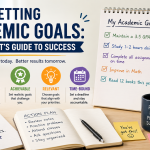


Learn effective ways to self-test your knowledge before exams. Discover practical study techniques, real-life examples, and smart revision methods to improve confidence and exam performance.
Preparing for exams can feel overwhelming. Many students spend hours reading textbooks and highlighting notes, yet they still feel unsure about how much they actually remember. The good news is that there is a simple way to check your readiness before the big day—self-testing.
Self-testing is one of the most effective study methods because it helps you identify what you know, what you don’t know, and where you need more practice. Instead of just reading information repeatedly, you actively challenge your brain to recall it. This process strengthens memory and improves understanding.
Let’s explore some practical ways to self-test your knowledge before exams.
Why Self-Testing Matters
Imagine a student named Rahul from Ahmedabad. He spent two weeks reading his science textbook before his board exams. He felt confident because he had read every chapter multiple times.
However, when he tried solving sample questions, he struggled to remember important concepts. That’s when he realized that reading and remembering are two different things.
Self-testing bridges this gap. It allows students to measure their actual understanding rather than their familiarity with the material.
Benefits of Self-Testing
- Improves memory retention
- Identifies weak topics
- Builds exam confidence
- Reduces last-minute stress
- Enhances problem-solving skills
1. Use Practice Tests and Sample Papers
One of the easiest ways to self-test is by solving previous years’ question papers and mock tests.
These papers give you a clear idea of:
- Exam patterns
- Question formats
- Time management requirements
For example, if you’re preparing for CBSE board exams, solving past papers can help you understand which topics appear frequently and where you need improvement.
Tip:
Set a timer and attempt the paper under actual exam conditions.
2. Try the “Blank Paper” Method
This technique is simple but powerful.
Choose a topic you’ve studied. Take a blank sheet of paper and write everything you remember about it without looking at your notes.
For instance, if you’re studying photosynthesis, write down:
- Definition
- Process
- Equation
- Importance
Afterward, compare your answers with your textbook and identify missing points.
This method quickly reveals knowledge gaps.
3. Create Your Own Quiz Questions
When you create questions, your brain processes information at a deeper level.
After finishing a chapter, prepare:
- Multiple-choice questions
- True or false questions
- Short-answer questions
Ask yourself these questions after a few days.
This approach is especially useful for subjects like History, Biology, and Economics.
4. Teach Someone Else
There’s a famous saying:
“If you can’t explain it simply, you don’t understand it well enough.”
Try teaching a topic to:
- A friend
- A sibling
- A parent
For example, if you’re studying the Indian Constitution, explain the fundamental rights in simple language.
If you struggle during the explanation, you know exactly where you need more revision.
5. Use Flashcards for Quick Recall
Flashcards are excellent for memorizing:
- Formulas
- Vocabulary
- Dates
- Definitions
Write the question on one side and the answer on the other.
Review them regularly and separate cards into:
- Easy
- Medium
- Difficult
Spend extra time on the difficult ones.
6. Solve Questions Without Notes
Many students keep checking their notes while solving questions.
Avoid this habit.
Attempt questions independently first. Only refer to notes after completing your answers.
This mimics actual exam conditions and helps build confidence.
7. Follow the 24-Hour Recall Rule
After studying a topic, test yourself within the next 24 hours.
Research shows that reviewing information shortly after learning improves long-term retention.
For example:
- Study Chapter 1 today.
- Tomorrow, answer questions from that chapter without reopening your notes.
You’ll remember more and forget less.
8. Use Online Quiz Platforms
Today, students have access to various educational websites and apps that offer practice quizzes.
These tools provide:
- Instant feedback
- Performance analysis
- Topic-wise assessments
They’re especially useful for competitive exams like JEE, NEET, UPSC, and SSC.
9. Maintain an Error Notebook
Whenever you make a mistake in a test, write it down in a dedicated notebook.
Include:
- The question
- Your mistake
- The correct answer
- Reason for the error
Review this notebook before exams.
Many toppers use this technique because it prevents repeating the same mistakes.
10. Rate Your Confidence Level
After each chapter, rate yourself:
- 5/5 = Fully confident
- 4/5 = Minor revision needed
- 3/5 = Moderate understanding
- 2/5 = Needs more practice
- 1/5 = Need to relearn
This simple system helps prioritize revision time effectively.
Common Self-Testing Mistakes to Avoid
Only Reading Notes
Reading creates a false sense of confidence. Always test recall.
Ignoring Weak Areas
Many students repeatedly study topics they already know. Focus more on difficult chapters.
Not Timing Yourself
Practice under time limits to improve speed and accuracy.
Testing Too Late
Don’t wait until the last week before exams. Start self-testing throughout your preparation.
Real-Life Example
Priya, a Class 12 student from Vadodara, struggled with Chemistry. Instead of rereading chapters endlessly, she started taking chapter-wise quizzes every weekend.
She maintained an error notebook and revised her mistakes regularly. Within two months, her test scores improved significantly, and she felt much more confident before her board exams.
The difference wasn’t more study hours—it was smarter study methods.
Sources
https://l1nq.com/or4z0y1
https://sl1nk.com/98ph7bv
Conclusion
Self-testing is one of the most effective ways to prepare for exams. It transforms passive studying into active learning and helps students understand their true level of preparation. Whether you use practice papers, flashcards, quizzes, or the blank-paper method, the goal is the same: challenge yourself before the exam does.
Remember, success in exams isn’t just about studying harder. It’s about studying smarter. By regularly testing your knowledge, identifying weak areas, and correcting mistakes, you can walk into the exam hall with greater confidence and a stronger chance of success.
Frequently Asked Questions (FAQs)
1. How often should I self-test before exams?
Ideally, you should self-test after completing every chapter and conduct full-length mock tests weekly as exams approach.
2. Is self-testing better than rereading notes?
Yes. Self-testing improves memory retention and understanding more effectively than passive rereading.
3. Which subjects benefit most from self-testing?
All subjects benefit from self-testing, including Mathematics, Science, Social Studies, Languages, and competitive exam preparation.
4. Can self-testing reduce exam anxiety?
Yes. Regular self-testing increases familiarity with exam conditions and boosts confidence, reducing stress and anxiety.
5. What is the best self-testing technique for board exams?
Solving previous years’ papers, mock tests, and using the blank-paper recall method are among the most effective techniques for board exam preparation.